
The Great Rebalancing: Where the Solar Industry Goes from Here
By the BestSolar Research & Market Analysis Team · 2026-07-15 · Insights
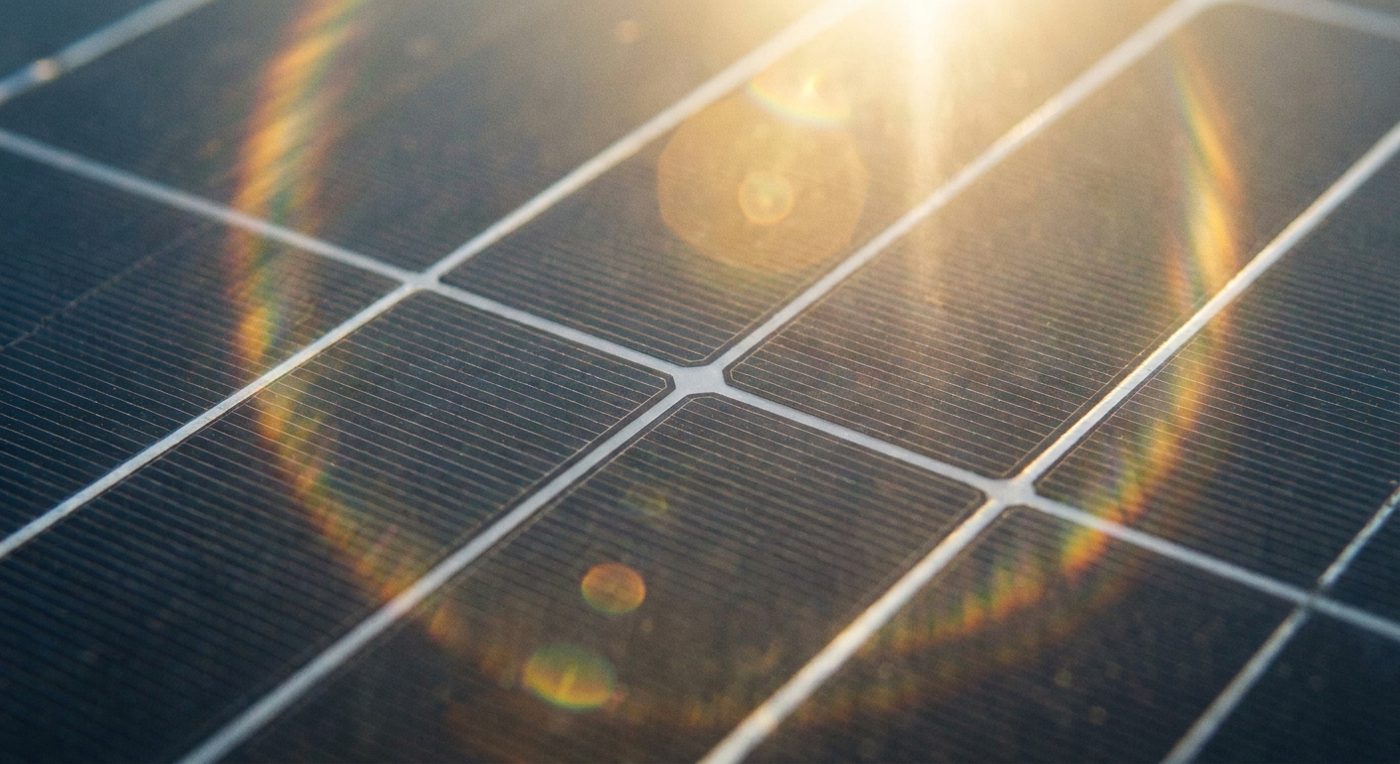
Change in the solar industry continues to accelerate—but for the first time in years, the market is moving in a more constructive direction. The industry is leaving the era of unchecked capacity expansion behind. Leading market participants are no longer asking who can add the most gigawatts, but who can deliver measurable value through reliable products, bankable projects and technology that improves over time.
At BestSolar, we believe the second half of 2026 marks a genuine inflection point—a broad rebalancing across supply, demand and technology. Here is how we see the market changing and where we are focusing our investment.
Supply: from race to discipline
Something meaningful happened upstream this July. According to industry surveys, leading wafer manufacturers initiated planned production cuts, bringing industry-wide wafer output down roughly 5–6% month-over-month, even as cell production schedules edged upward.
We read this not as weakness, but as maturity. With inventories at top producers running beyond reasonable levels, the industry chose discipline over another round of destructive price competition. The divergence between a contracting wafer segment and a recovering cell segment suggests that the value chain is actively seeking a new equilibrium from within, rather than waiting for external pressure to force an adjustment.
The signal is already propagating downstream. PV-grade EVA transaction prices have edged up to around RMB 9,700 per tonne, and a new round of monthly pricing negotiations between film and module makers is underway. Cost recovery at the margins is real, and it is spreading.
Demand: the map is being redrawn
If the supply story is about discipline, the demand story is about reinvention.
A new class of project is redefining the role of solar generation. In Abu Dhabi, a landmark Round-the-Clock facility is under construction—5.2 GW of solar paired with 19 GWh of battery storage, designed to deliver 1 GW of clean baseload power around the clock, with full operation expected in 2027. Its electricity is intended to meet demand growth from economic expansion and new AI infrastructure. Solar, storage and AI-driven demand are no longer merely a concept; together, they now form a distinct procurement category and one of this decade's most important demand signals.
Mature markets tell a subtler story. Germany's latest rooftop solar auction awarded 208.57 MW—up from the previous round, yet still undersubscribed—with the weighted average price rising to €0.0972/kWh. The lesson is clear: in established markets, growth no longer goes automatically to the lowest bidder. It goes to those who can provide local service, dependable execution and long-term trust.
This is why BestSolar continues to invest in local capabilities and integrated solar-plus-storage systems rather than pursuing volume alone. Market structure now matters more than total volume, and it rewards companies that are prepared.
Technology: the only certainty that compounds
Prices fluctuate and production capacity expands or contracts. Continued technological progress offers the industry's most durable path forward.
Consider metallization. Silver paste has overtaken silicon as the largest cost item in a module—approaching 30% of total cost—while the industry consumes more than 6,000 tonnes of silver annually, more than a quarter of global industrial silver demand. Every movement in the silver price directly affects industry margins. That is why silver-free and low-silver metallization has become a key cost-reduction pathway, and why competition among next-generation cell technologies has shifted from datasheet claims to verified energy yield under real operating conditions.
Our approach rests on a non-negotiable principle: we will not trade long-term technical depth for short-term volume. In a cyclical industry, innovation is the strongest route away from commodity price competition and an advantage that builds over time. BestSolar's sustained investment in next-generation cell and module technology reflects this conviction.
The long game
In the second half of 2026, the solar industry is moving from scale to value, from expansion to discipline and from selling modules to delivering outcomes. Rebalancing of this kind is rarely comfortable. For companies built on proven products, dependable service and sustained technical development, however, it creates the most constructive environment in years.
Ultimately, success depends on trust and technology—and on helping customers and partners pursue dependable returns through every phase of the cycle. That is what BestSolar was built to do.
The BestSolar Research & Market Analysis Team tracks global solar supply chains, market dynamics and technology trends, delivering independent insights that inform BestSolar's strategy and support its customers and partners worldwide. Data referenced in this article is drawn from publicly available industry sources as of July 2026 and is provided for informational purposes only.